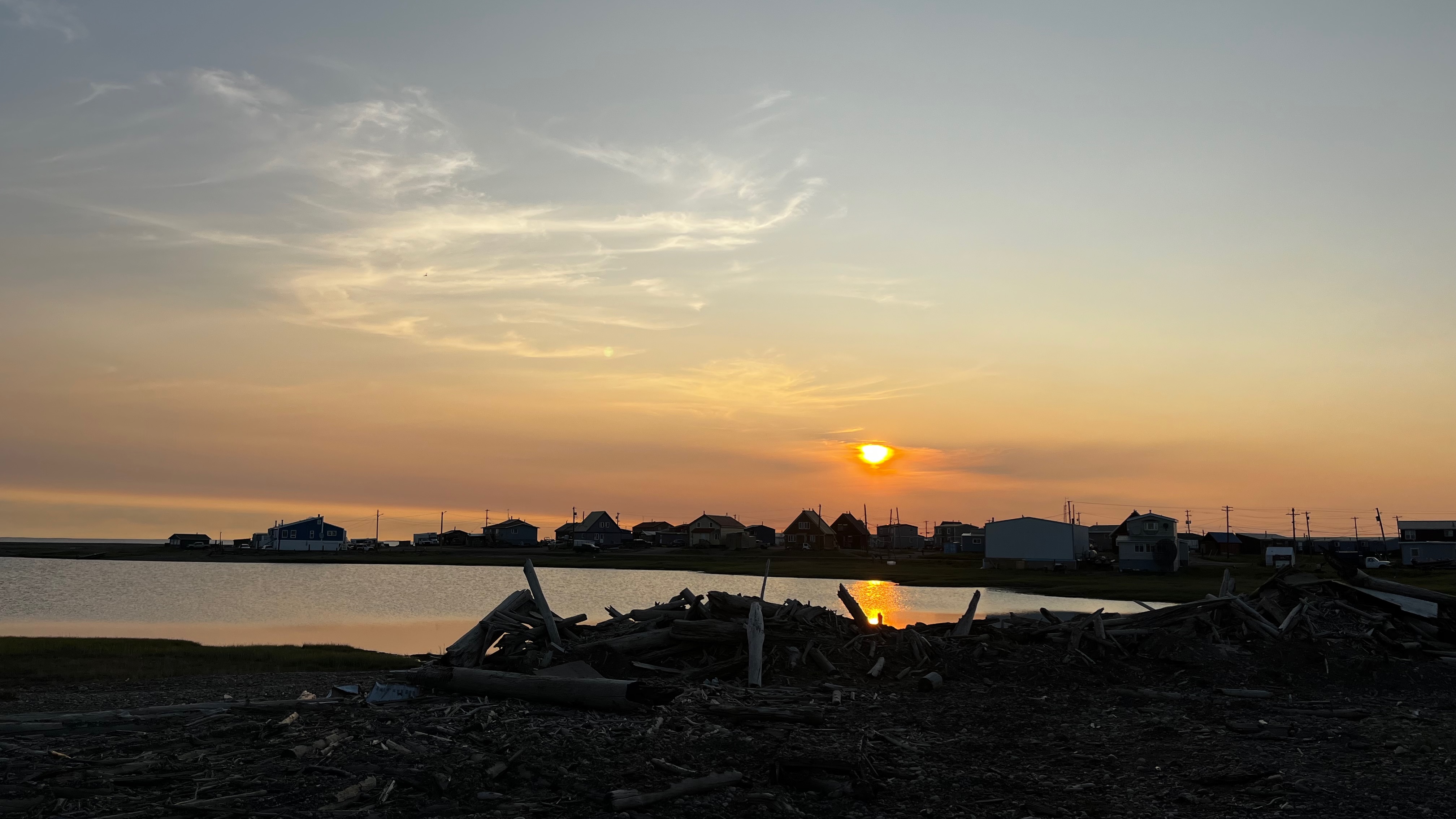
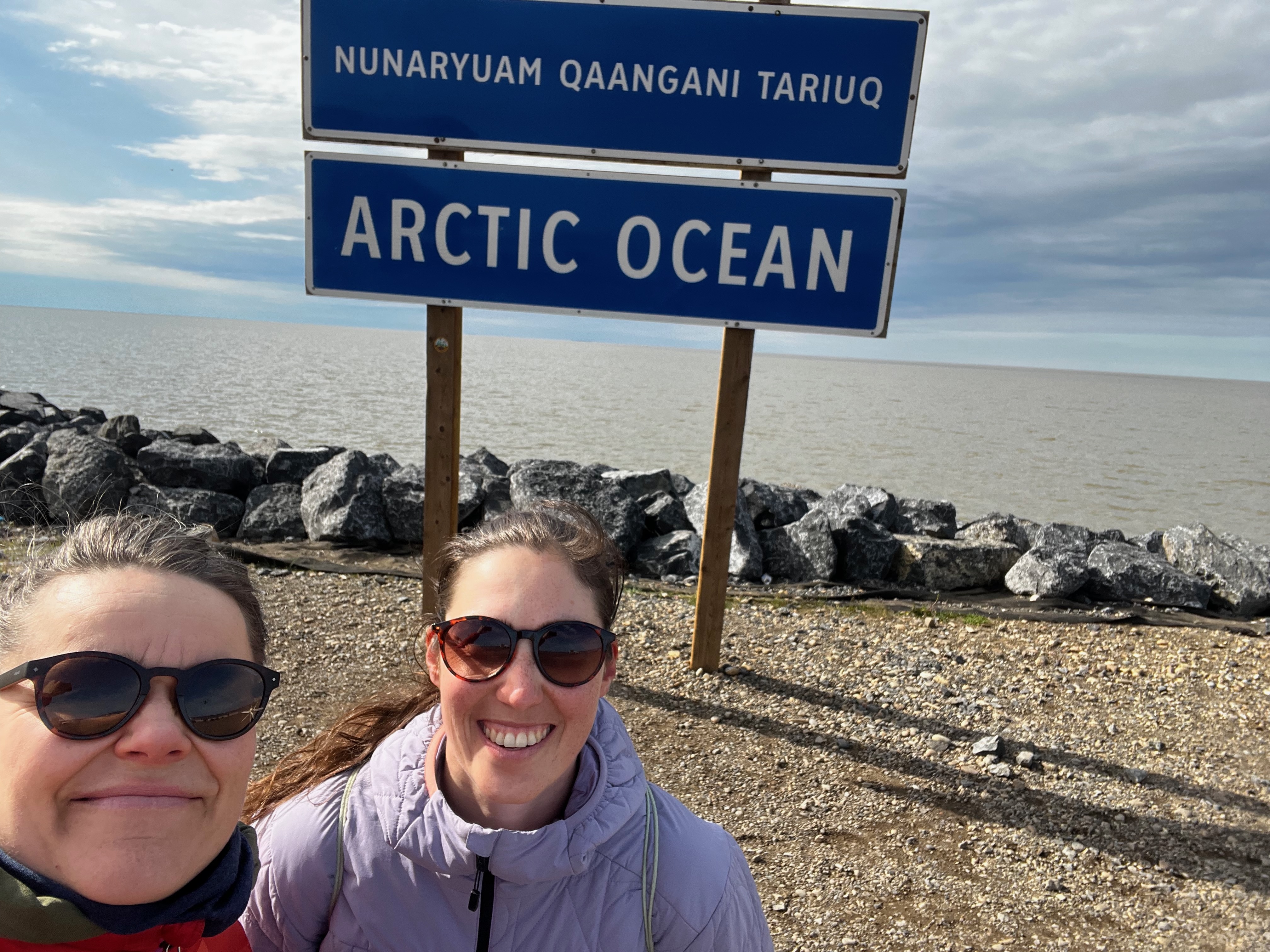
This leg of the Yukon Coast expedition brought AWI PhD student Pia Petzold and ILLUQ project manager Leena-Kaisa Viitanen to Tuktoyaktuk, Northwest Territories (NWT), where we spent a month working in this small community on the shores of the Arctic Ocean.
Tuktoyaktuk is a popular destination for travellers who brave the entire Dempster Highway to pose beside the famous Arctic Ocean sign at the end of the road. We, though also of course posing by the sign, had come for a different reason: science - and, just as importantly, to reconnect with the people we had met during our previous visit, and whose knowledge, trust and support became the foundation of this project.
During our stay in Tuktoyaktuk last year, we met with members and representatives of the Tuktoyaktuk Hunters and Trappers Committee (THTC). The connection was made through our project partner Dustin Whalen of Natural Resources Canada, and the conversations that followed helped shape our work in Tuktoyaktuk this summer. Our research explores coastal ecosystem services in the Arctic - in other words, how people use coastal environments and how those environments contribute to human
well-being.
From our discussions in 2025 it became clear that harvesting cabins and the environment surrounding them are important hubs of activity, knowledge and connection for the people along Arctic coasts. We therefore identified these places as key hotspots for coastal ecosystem services in this specific area and made them a central focus of this year’s research.
This year, we worked closely with the THTC Marine Coordinator and other committee representatives. The project’s natural science component draws largely on research conducted by Dustin Whalen and his team over the past several years, while this expedition focused on the social science perspective. Our original plan was to introduce our work in the community by holding a participatory mapping workshop based on which we could have initiated in-depth interviews with community members, stakeholders and knowledge holders.
But as is often the case with fieldwork, things did not go entirely according to plan. For several reasons, we were unable to hold the participatory mapping workshop. Instead, we adapted the workshop questions into an online survey, which has been promoted throughout Tuktoyaktuk with flyers and QR codes. The survey will remain open until the end of September and will, we hope, capture some of the data we had originally intended to collect during the workshop.
The interviews could also begin later than expected. Although our research ethics approvals were already in place through the Aurora College Research Ethicsm Committee, we still needed to obtain a last approval from the THTC executives board before beginning our work in the community. Moreover, because the planned workshop could not take place, we needed to introduce ourselves and our research more widely through additional meetings and conversations with community members.
Thus, we used this unexpected extra time to become more involved in community life, support other ongoing research activities and strengthen local relationships. Our work included aerial surveys of several areas relevant to the THTC, boat trips to culturally important sites, driftwood surveys, bathymetric surveys and active-layer measurements at two nearby pingos. We also collected complementary drone imagery around harvesting cabin sites to prepare for the interviews.
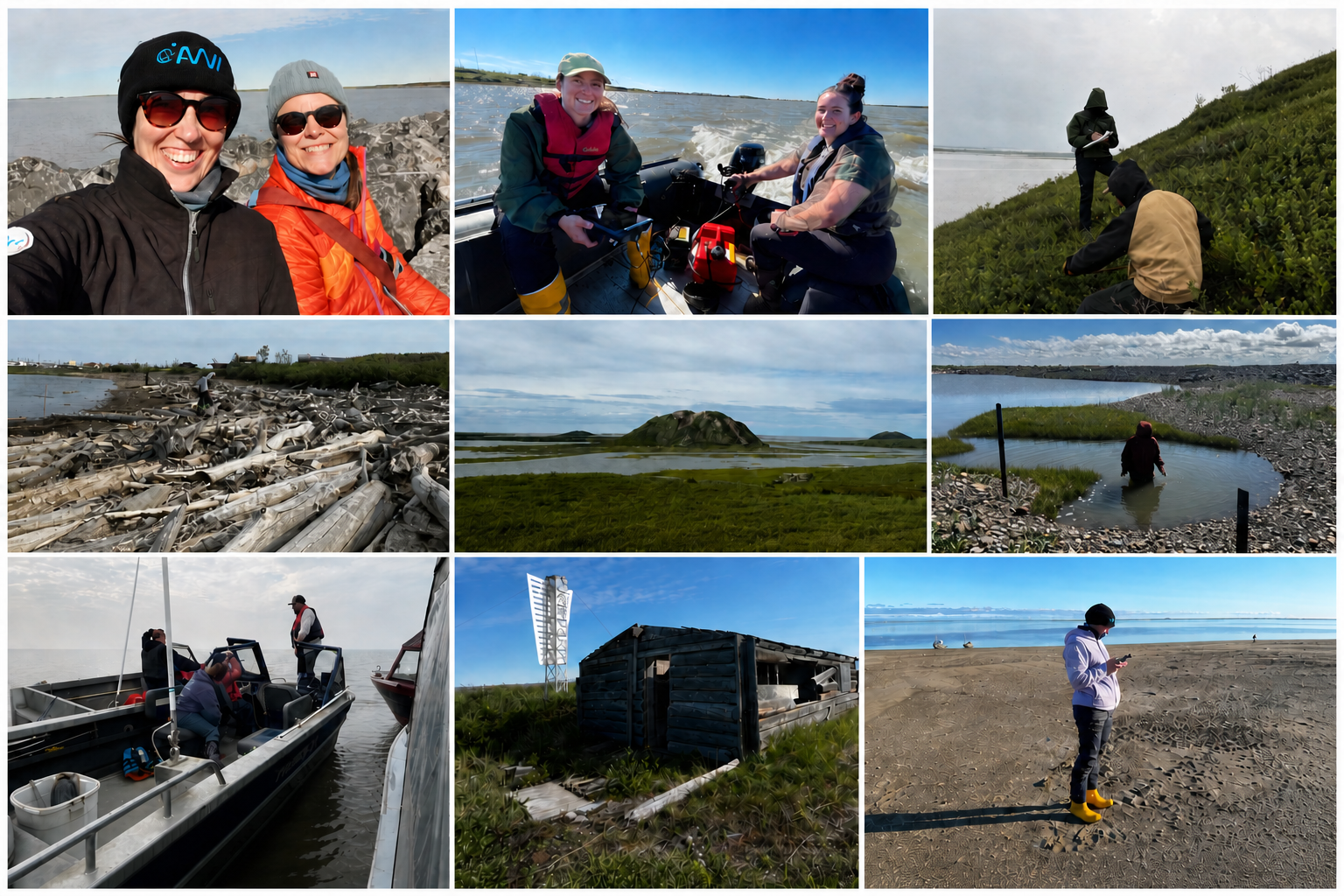
Although none of these activities had been part of our original plan, they became some of the most valuable and rewarding experiences of the expedition. Working alongside community members gave us a deeper understanding of the local environment, how the land and coast are used, and what matters most to the community. It also helped build the trust and familiarity that proved especially valuable when the interviews finally began.
Despite the shortened timeframe, we ultimately conducted five interviews on harvesting cabin use and travel on the land, with particular attention to the benefits people receive from coastal environments and the many ways these places support well-being.
Fortunately, our growing involvement in the community also connected us with researchers and projects beyond our existing networks whose work closely aligns with our own. These connections created valuable opportunities for collaboration and allowed our research to continue, even as our time in Tuktoyaktuk was coming to an end. While we were travelling home, our new collaborators conducted additional interviews in Tuktoyaktuk that incorporated our questions and research interests. Further interviews are now planned online and together with these new collaborations this allows our work to be continued well beyond the expedition itself.
Overall, although the expedition did not unfold exactly as planned, it gave us valuable scientific insights, fresh perspectives and - perhaps most importantly - meaningful relationships within the community. We can now build on the qualitative data collected during our stay, together with the complementary field data and knowledge gained through our collaborators and all activities we took part in.
The support of the THTC was invaluable throughout this process. Its representatives helped us connect with community members, navigate the local context and ensure that our work remained grounded in community knowledge and priorities. Combined with the relationships developed during our stay, this support gave us a much deeper understanding of the local context and laid a foundation for research that can remain relevant to the Tuktoyaktuk community well beyond this expedition.